Celta Vigo · 1997/98 · Home
Celta Vigo 1997/98 Home: the story behind the shirt
Celta Vigo’s sky blue Umbro home shirt marked a sixth-place league finish and qualification for the UEFA Cup, with Citroën sponsorship central to its identity.
The season
Celta Vigo finished sixth in La Liga in 1997/98 under Javier Irureta, qualifying for the following season’s UEFA Cup. It was an important step towards the sustained European involvement that distinguished the club around the turn of the millennium.
The distinction matters when placing the shirt historically: this was the domestic campaign that secured a return to Europe, rather than the season of the subsequent UEFA Cup run.
The shirt
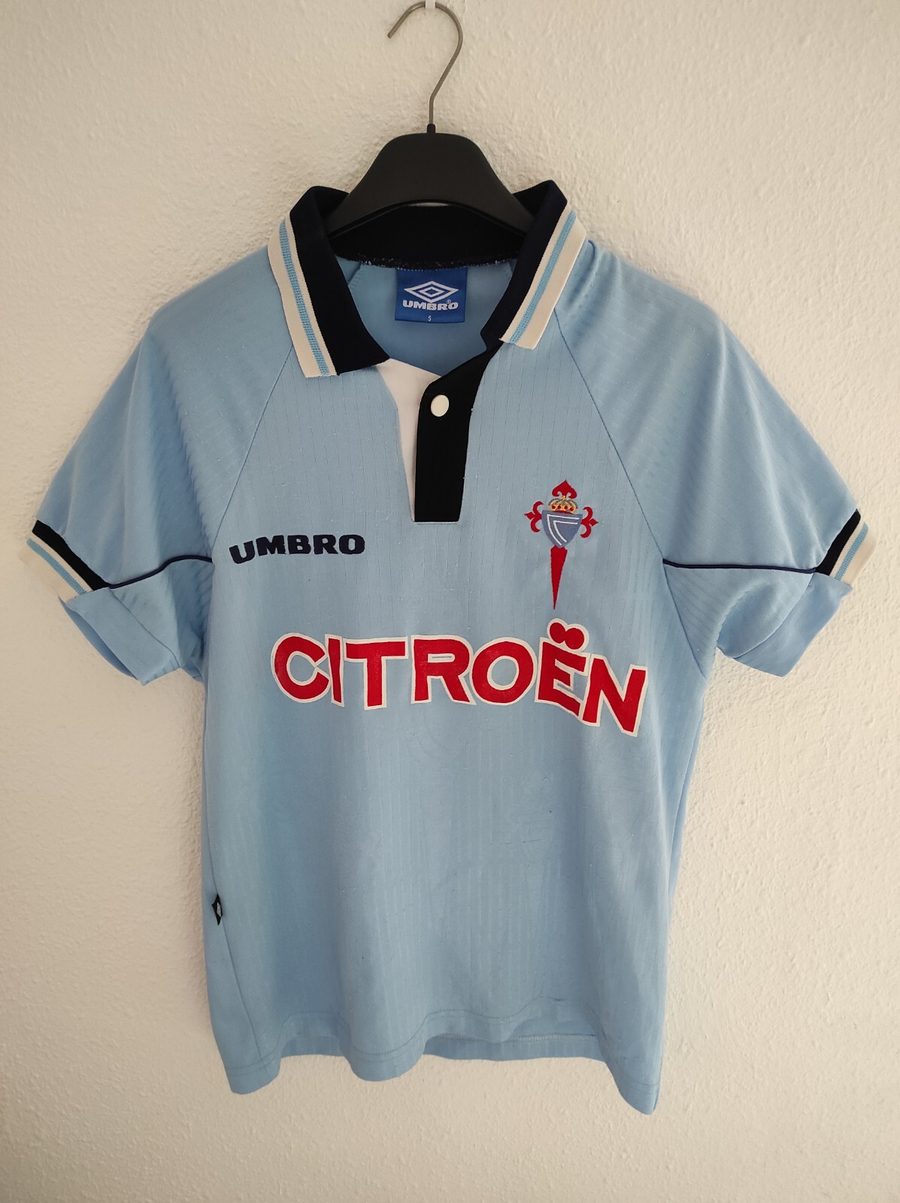
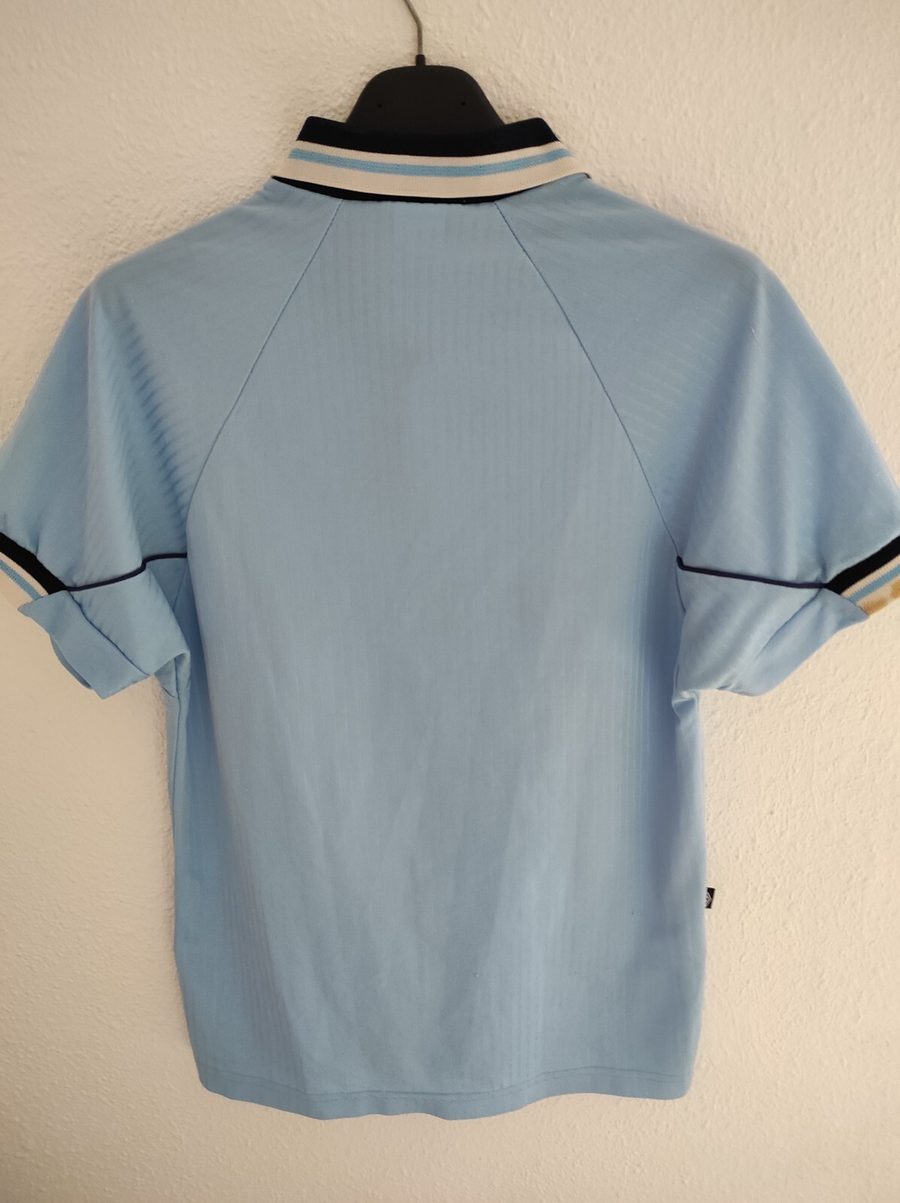
Umbro’s design retained Celta’s traditional sky blue, with a subtle tonal stripe texture rather than a bold contrasting body pattern. A dark navy fold-over collar, white and sky blue trim, and a short buttoned neckline gave the shirt a characteristic late-1990s finish. The sleeve cuffs echoed the collar colours.
The Umbro wordmark sat on the right chest, opposite Celta’s crowned crest with its red cross of Saint James. Citroën appeared prominently across the front in red lettering outlined in white. The sponsor was a longstanding part of Celta’s visual identity and reflected the car manufacturer’s strong industrial connection with Vigo.
The players
Aleksandr Mostovoi and Valery Karpin were prominent members of the squad, alongside Brazilian midfielder Mazinho and Israeli attacking midfielder Haim Revivo. Their technical quality helped define the Celta side associated with this period.
Bulgarian striker Luboslav Penev was another notable member of the 1997/98 team. Míchel Salgado featured in defence before his later move to Real Madrid, giving the season a further connection to a player who became widely known beyond Vigo.
Why collectors want it
The shirt brings together several recognisable elements of Celta’s late-1990s identity: Umbro manufacture, sky blue fabric, the red Citroën sponsor and a squad containing Mostovoi, Karpin and Mazinho. Its historical significance rests on the qualification campaign that preceded the club’s more widely remembered European performances.
For collections focused on Spanish football or Umbro’s 1990s designs, the restrained body pattern and contrasting collar provide a clear period reference without departing from Celta’s established colours.
Updated 15 November 2026