Espanyol · 2001/02 · Home
Espanyol 2001/02 Home: the story behind the shirt
Espanyol’s 2001/02 John Smith home shirt combined blue and white stripes with Futvol.com sponsorship during the club’s years at Montjuïc.
The season
Espanyol finished 14th in La Liga in 2001/02 under Paco Flores. The campaign came two seasons after their Copa del Rey triumph in 2000, with several players from that period still central to the side.
Home matches were played at the Olympic Stadium on Montjuïc. The shirt therefore belongs to the chapter between Espanyol’s departure from Sarrià in 1997 and their move to Cornellà-El Prat in 2009.
The shirt
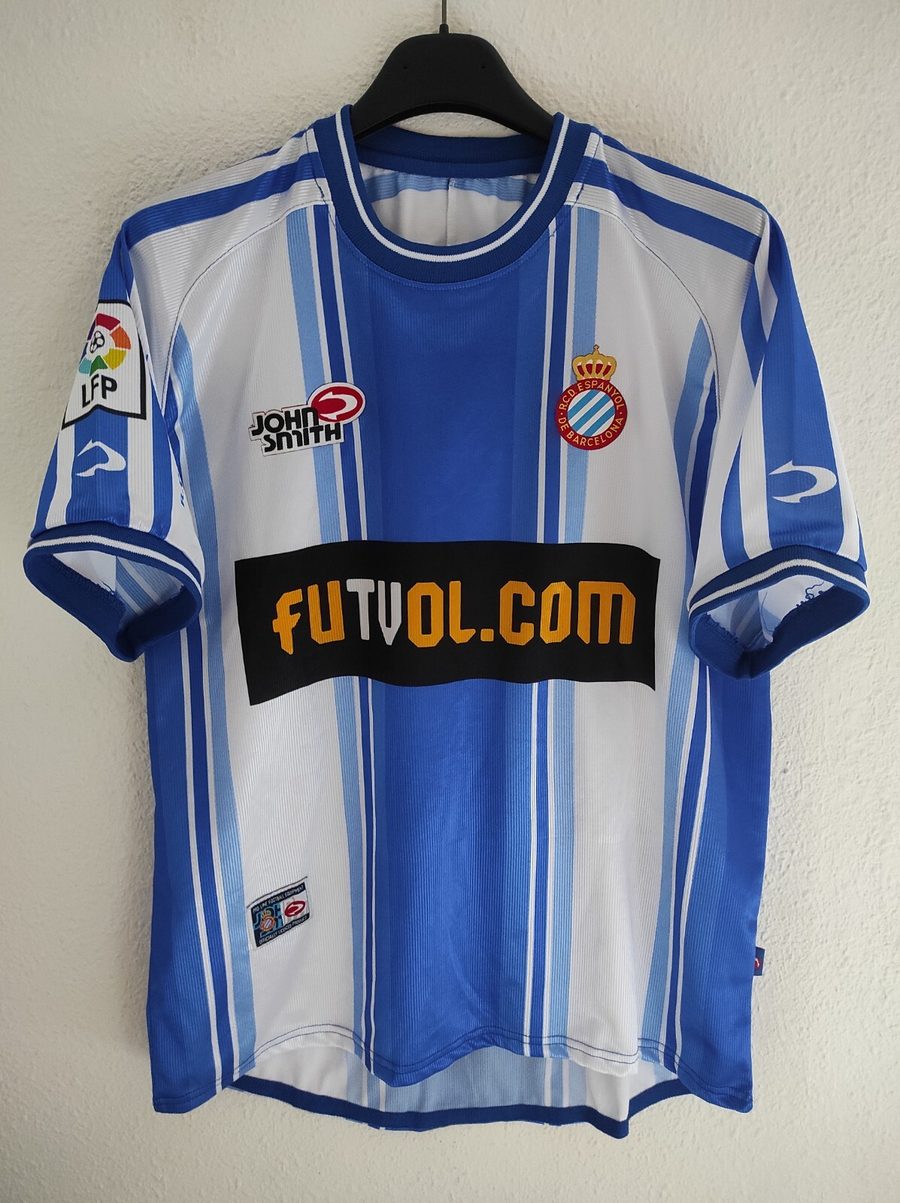
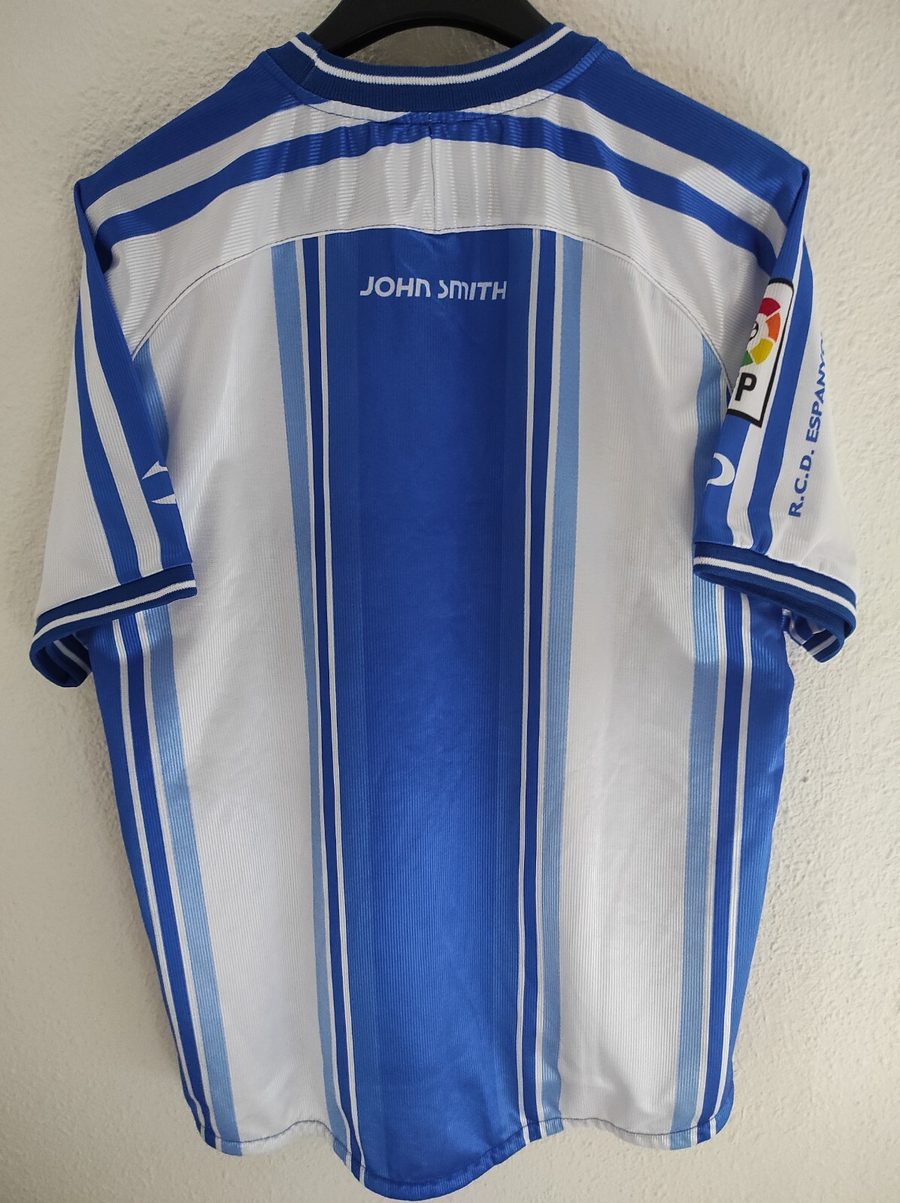
John Smith supplied the home shirt in Espanyol’s traditional blue and white vertical stripes. Broad stripes were accompanied by finer blue and white lines and lighter blue accents, giving the pattern more detail than a simple alternating stripe. A blue round neck and blue sleeve cuffs carried narrow white trim.
The crowned club crest sat on the left chest, opposite the John Smith logo. Its red circular border enclosed diagonal blue and white stripes. Futvol.com provided the central sponsorship, with orange and white lettering on a black panel that contrasted strongly with the club colours.
The players
Raúl Tamudo was the defining attacking figure in the squad. An Espanyol academy graduate and a scorer in the 2000 Copa del Rey final, he provides a direct link between this shirt and one of the club’s most significant modern players.
Midfielders Roger García and Àlex Fernández were also members of the 2001/02 side. Their presence places the design within the established Espanyol team of the early 2000s, before the later midfield partnership associated with Iván de la Peña.
Why collectors want it
The design brings together three useful reference points for an Espanyol collection: the John Smith manufacturing period, Futvol.com sponsorship and the Montjuïc years. Its fine stripe detailing distinguishes it within the club’s long tradition of blue and white home shirts.
The connection with Tamudo adds historical interest without relying on a trophy-winning campaign. It represents the club’s everyday league identity in the years following the 2000 cup success.
Updated 15 November 2026