Flamengo · 1997/99 · Home
Flamengo 1997/99 Home: the story behind the shirt
Umbro’s Flamengo 1997/99 home shirt combines red and black hoops, Lubrax sponsorship and a distinctive late 1990s design associated with Romário’s time at the club.
The season
The 1997/99 designation covers a period of Brazilian calendar-year football rather than a single European-style season. Flamengo competed in Rio de Janeiro’s Campeonato Carioca alongside national and continental competitions, with the Maracanã central to the club’s home identity.
In 1997, Flamengo reached the Copa do Brasil final, finishing runners-up to Grêmio. The wider period also brought the 1999 Campeonato Carioca and Copa Mercosur titles, important milestones in the club’s late 1990s history.
The shirt
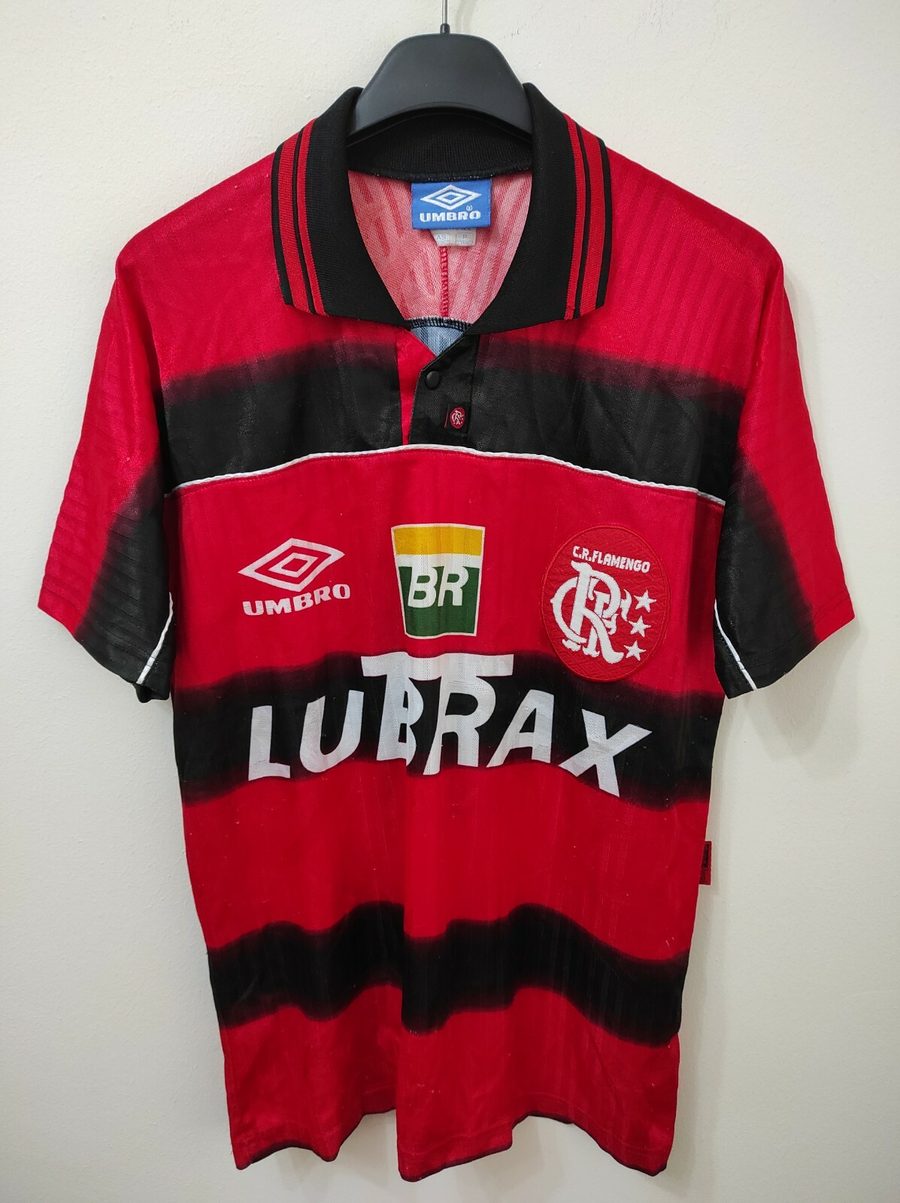
Umbro retained Flamengo’s traditional red and black horizontal hoops but gave the black bands soft, graduated edges. A black fold-over collar with red striping and fine white piping across the upper chest helped distinguish the design from more conventional interpretations of the club’s colours.
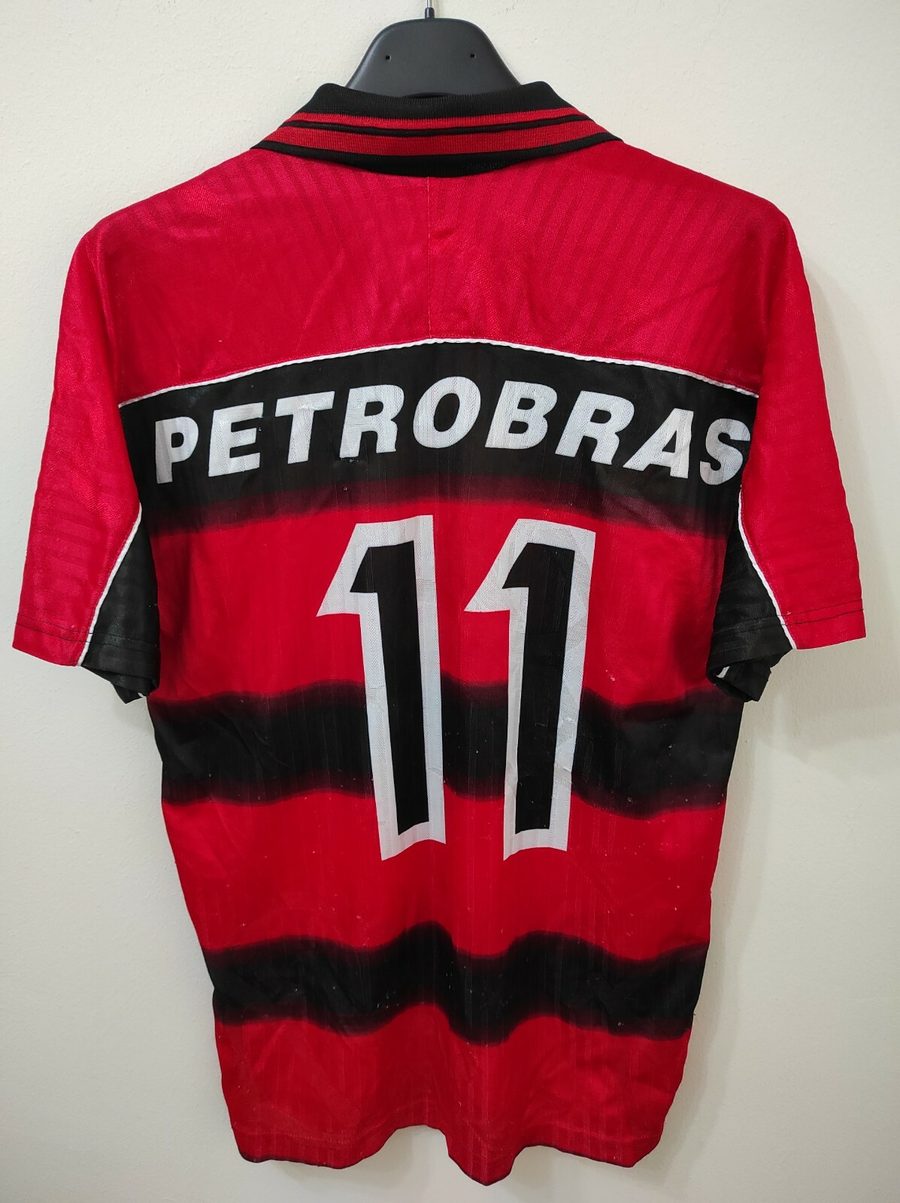
The chest combined Umbro’s white double-diamond branding with Flamengo’s intertwined CRF monogram in an oval red badge. Lubrax lettering formed the main front sponsor display, with the BR emblem above it, reflecting Flamengo’s longstanding sponsorship relationship with Petrobras.
The players
Romário was the leading attacking name associated with Flamengo during this period. The Brazil striker had joined the club from Barcelona in 1995 and remained a central figure through the late 1990s. Sávio was another notable attacking player in 1997, before moving to Real Madrid.
Juan represents the younger generation emerging at Flamengo during these years. Having progressed through the club’s youth system, the defender began his senior career in 1996 and developed into an important first-team player.
Why collectors want it
The design offers a distinct interpretation of Flamengo’s established colours: graduated hoops, a prominent collar and the oval crest treatment place it firmly within Umbro’s late 1990s work. The Lubrax and BR branding also connects it to a long-running chapter of the club’s visual history.
Its association with Romário’s Flamengo years gives it an additional historical focus. For collections organised around Brazilian football or Umbro design, it brings together a recognisable club identity and details specific to the period.
Updated 15 November 2026