Paris Saint-Germain · 2000/01 · Home
Paris Saint-Germain 2000/01 Home: the story behind the shirt
Nike’s Paris Saint-Germain 2000/01 home shirt paired a broad red central stripe with blue, white detailing and Opel sponsorship during a season of managerial change.
The season
Paris Saint-Germain entered 2000/01 after finishing runners-up in the previous French league campaign. They returned to the UEFA Champions League and reached its second group stage, but their domestic form fell short of that earlier standard, ending with ninth place in Division 1.
Philippe Bergeroo began the season as manager before Luis Fernandez returned to take charge in December 2000. The shirt therefore belongs to a campaign that combined European competition with a significant change of direction at the Parc des Princes.
The shirt
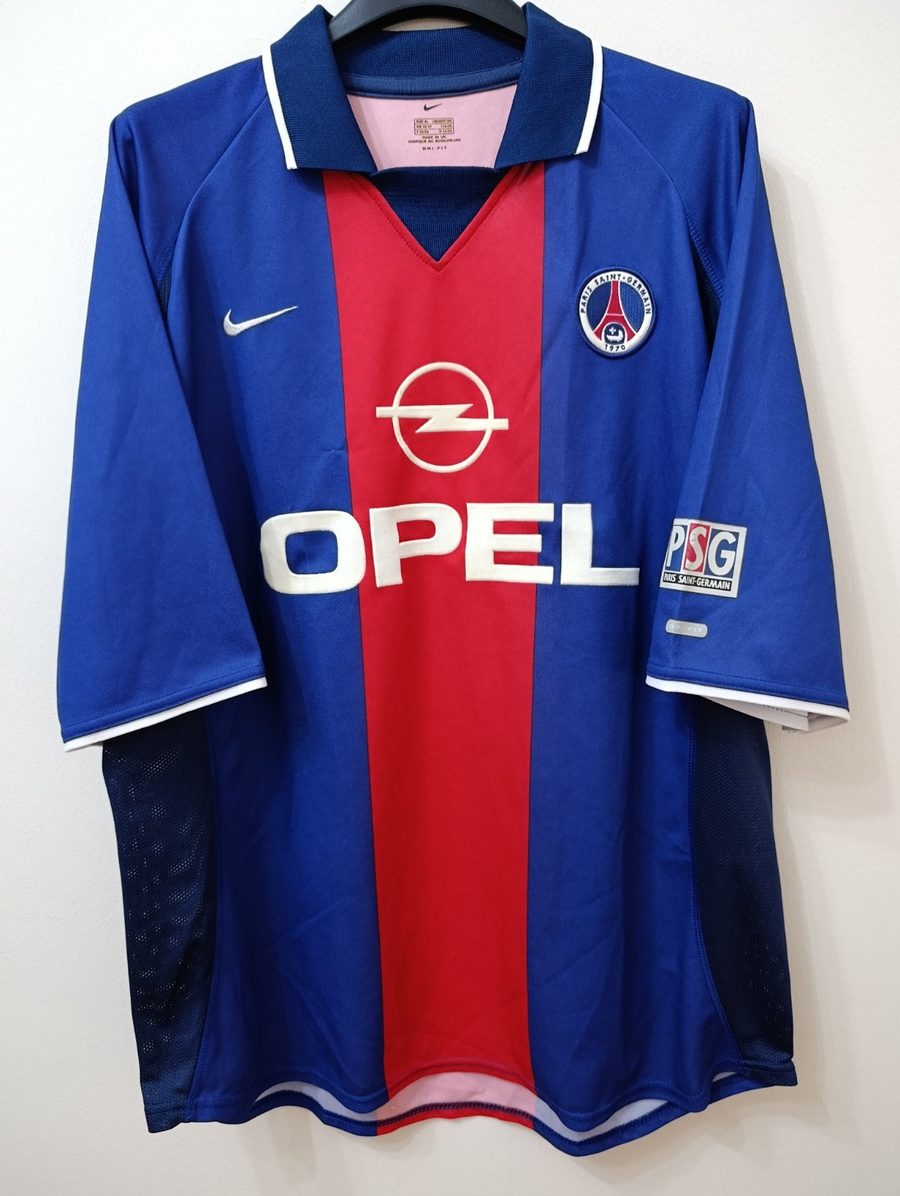
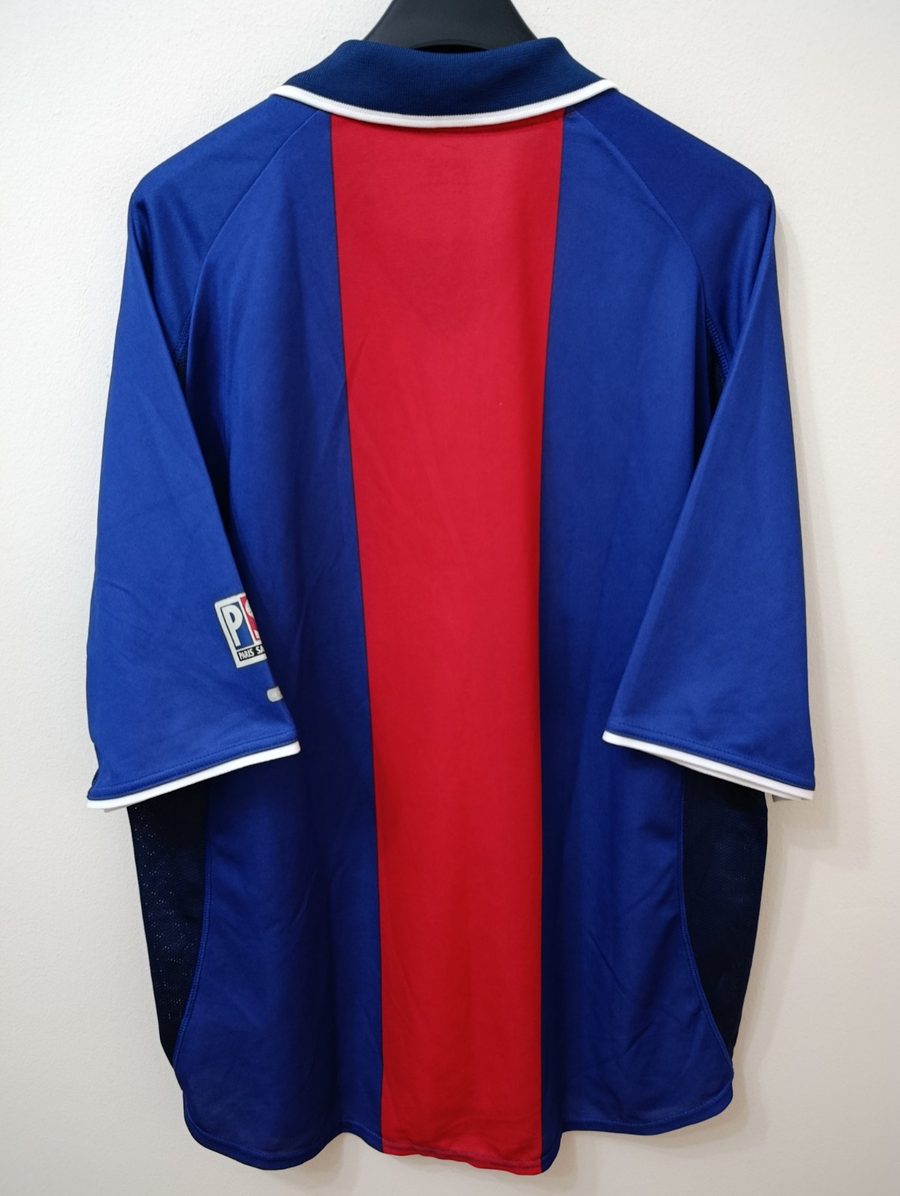
Nike’s home design used a blue body with a broad red central stripe, retaining the central colour arrangement closely associated with PSG. The red stripe sat directly against the blue without white borders. A blue fold-over collar and white trim at the collar and sleeve edges completed the design.
The white Nike Swoosh appeared on the right chest, opposite the club’s circular crest with its red Eiffel Tower and founding year of 1970. Opel supplied the main sponsorship, with its lightning-bolt emblem and large white wordmark across the front.
The players
Nicolas Anelka returned to PSG from Real Madrid in summer 2000, making this shirt part of his second spell at the club. Jay-Jay Okocha and Laurent Robert were also prominent attacking talents in the squad, alongside playmaker Ali Benarbia.
The team also included long-serving defender and captain Éric Rabesandratana, midfielder Édouard Cissé and goalkeeper Lionel Letizi. Their presence places the design firmly within PSG’s squad of the early 2000s.
Why collectors want it
The design brings together several defining elements of PSG’s Nike and Opel period: the blue and red body, prominent white sponsor and traditional fold-over collar. Its unbordered central stripe also makes it a useful reference point when tracing changes to the club’s home-shirt identity.
Its historical interest rests on Anelka’s return, Okocha’s time in Paris and a Champions League campaign spanning two group stages, rather than a domestic title-winning season.
Updated 15 November 2026