Russia · 1993 · Home
Russia 1993 Home: the story behind the shirt
Russia’s white Reebok home shirt combined bold red and blue graphics with a new national identity during qualification for the 1994 World Cup.
The season
The 1993 season belonged to the formative years of Russia’s national team following the dissolution of the Soviet Union. Russia had begun playing internationals under its own name in 1992, after the Commonwealth of Independent States team’s appearance at that summer’s European Championship.
Under Pavel Sadyrin, Russia completed qualification for the 1994 World Cup in the United States. They finished second behind Greece in their qualifying group, securing a place at their first World Cup finals as the post-Soviet Russian national side.
The shirt
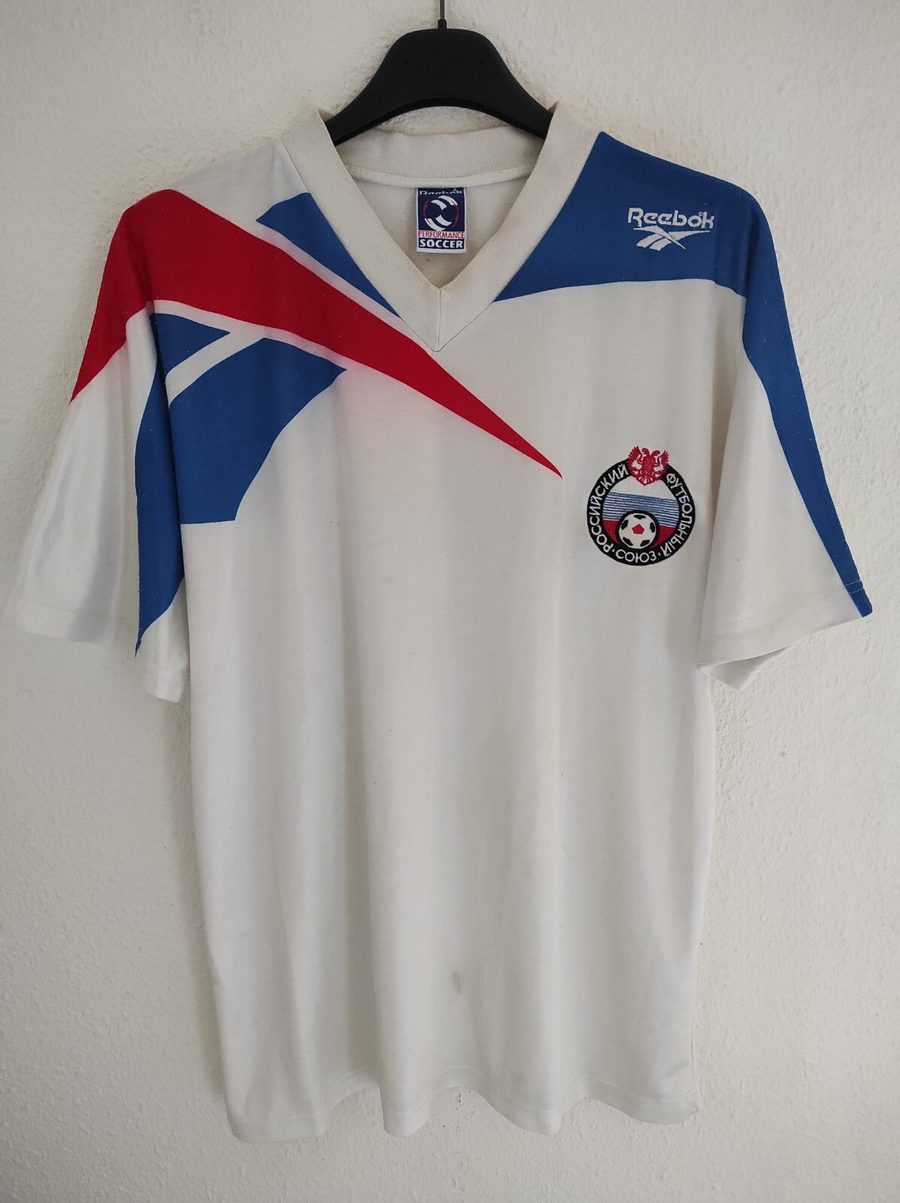
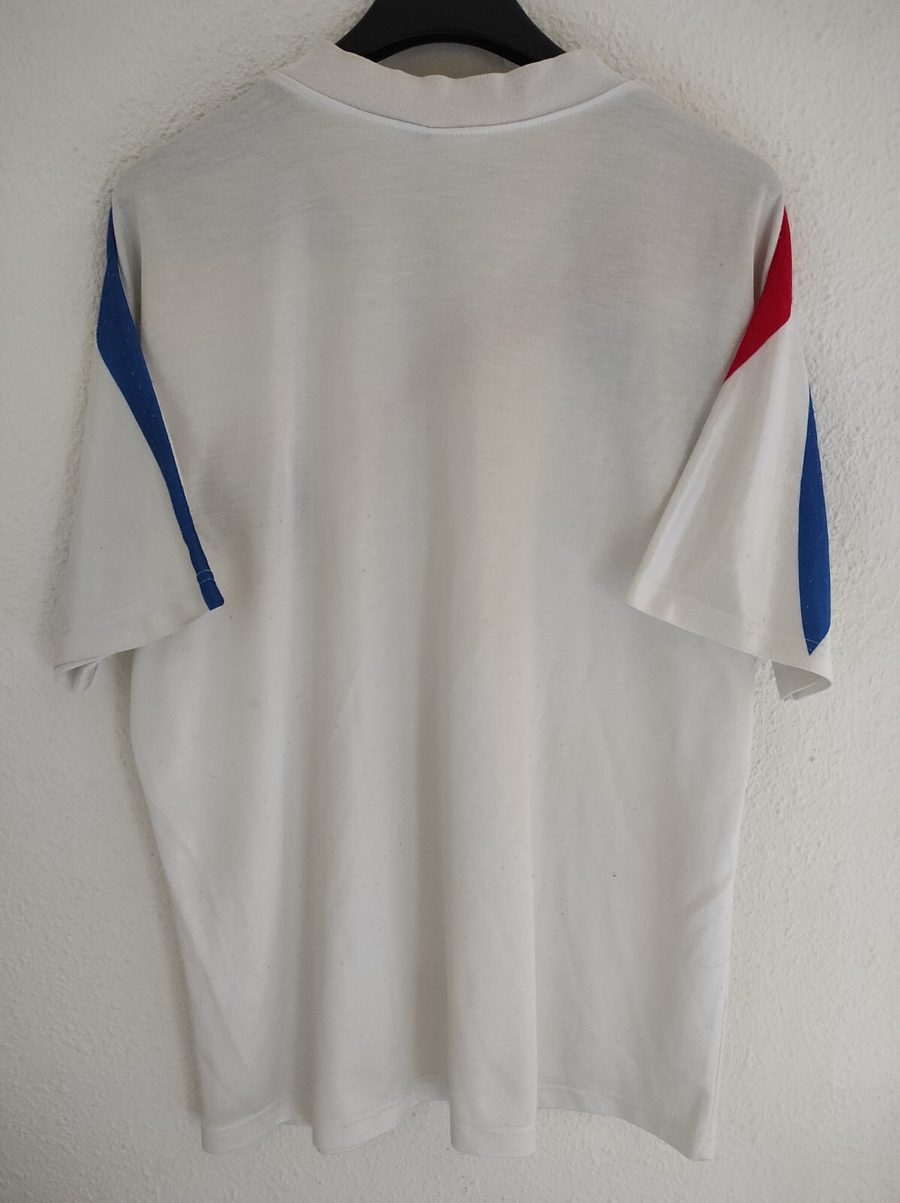
Reebok’s home design used a predominantly white body with bold, asymmetrical red and blue graphics across the shoulders, sleeves and upper chest. The angular pattern drew on the manufacturer’s vector identity, while the white V-neck kept the collar relatively simple. Together, the colours reflected the Russian tricolour rather than the red-dominated identity associated with the Soviet team.
The shirt carried Reebok branding and the Russian Football Union crest, with its football, national colours and double-headed eagle. There was no commercial shirt sponsor. The large geometric elements, rather than an all-over fabric pattern, provided the design’s main visual distinction.
The players
Notable members of Russia’s 1993 side included Viktor Onopko, Igor Shalimov, Aleksandr Mostovoi, Valeri Karpin and Andrei Kanchelskis. They linked the new national team to the Soviet football system in which much of the squad had developed.
Kanchelskis brought experience from Manchester United, while Shalimov was playing for Internazionale. Alongside players from Russian clubs, these overseas-based internationals helped shape the team during its first World Cup qualifying campaign.
Why collectors want it
The shirt’s historical interest lies in its place near the beginning of Russia’s separate post-Soviet football identity. Its national colours and federation badge mark that transition clearly, while its association with successful World Cup qualification gives it a specific sporting context.
For collectors of early 1990s international shirts, the oversized Reebok graphics are equally significant. The design combines a largely white base with the assertive geometric styling characteristic of the period.
References
Updated 15 November 2026