Sweden · 1998/99 · Home
Sweden 1998/99 Home: the story behind the shirt
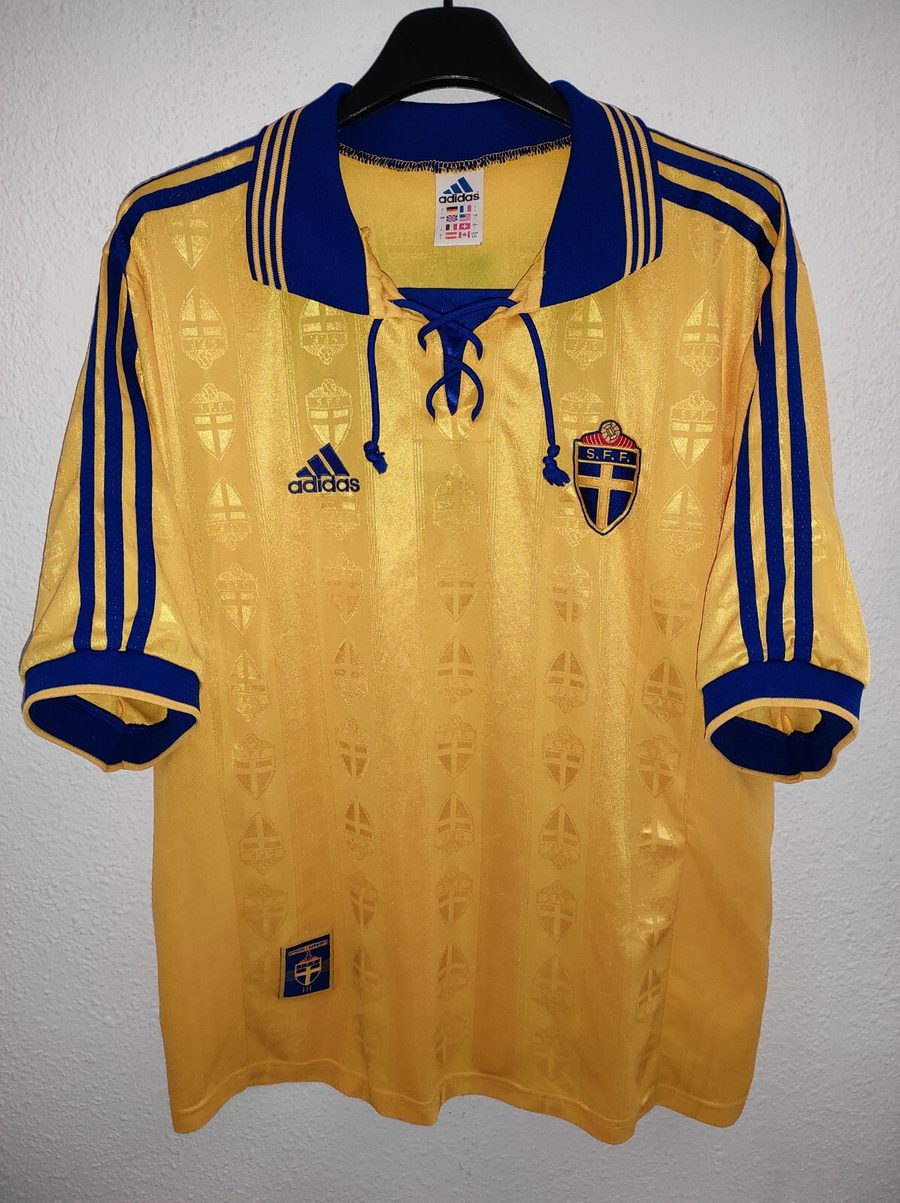
Sweden’s Adidas home shirt paired yellow and blue with a lace-up collar during the national team’s successful qualifying campaign for Euro 2000.
The season
Sweden entered 1998 having failed to qualify for the World Cup in France. Tommy Söderberg took charge of the national team that year, succeeding Tommy Svensson, and attention turned towards qualification for Euro 2000.
The qualifying campaign restored Sweden’s place at a major tournament. They finished unbeaten at the top of a group containing England, Poland, Bulgaria and Luxembourg, securing direct qualification for the finals in Belgium and the Netherlands.
The shirt
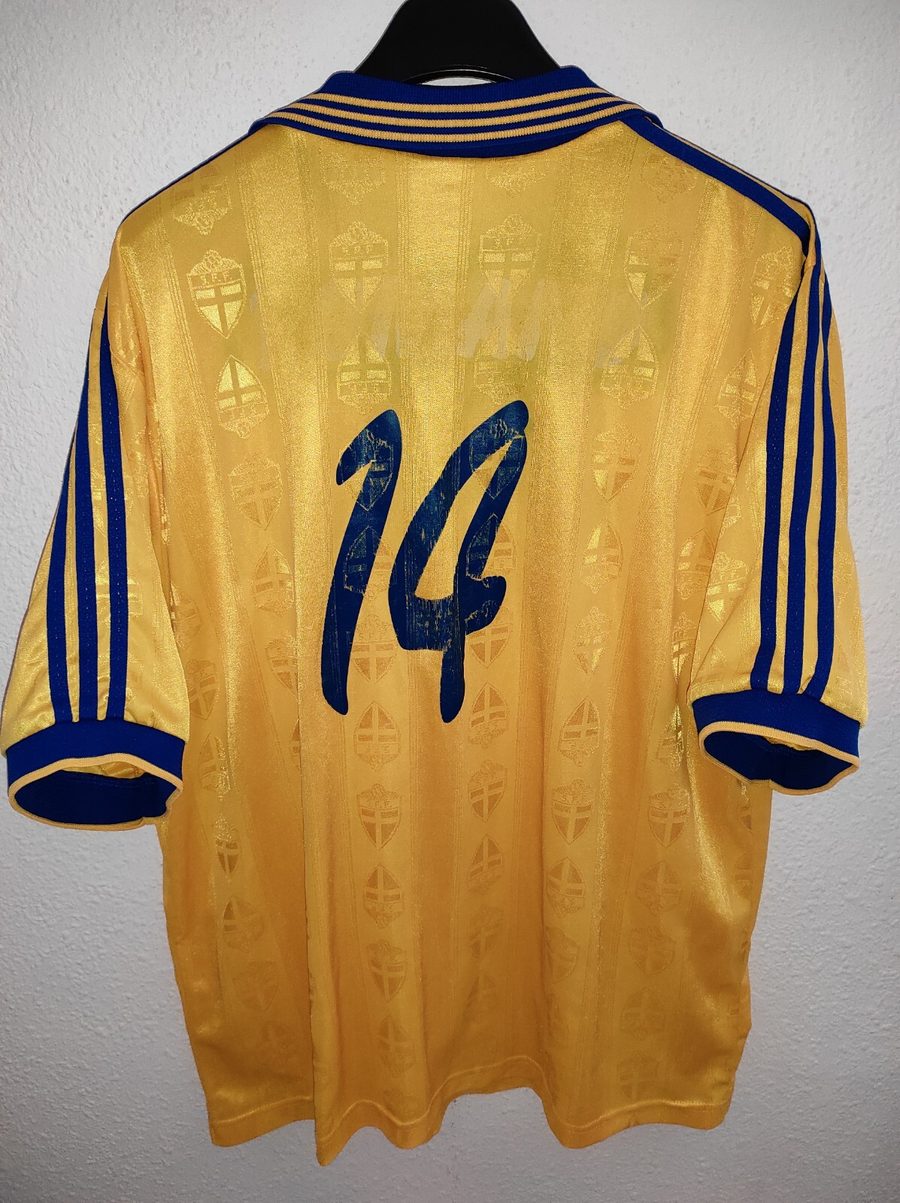
Adidas retained Sweden’s traditional yellow body with blue detailing. The design combined a blue fold-over collar and lace-up neckline with three blue stripes along the shoulders and sleeves. Blue sleeve cuffs reinforced the colour contrast, while a tonal pattern of repeated Swedish football association shields gave the yellow fabric its distinctive texture.
The association crest occupied the left chest, opposite the Adidas logo. Its blue shield and yellow cross echoed the national flag. There was no commercial shirt sponsor, leaving the national badge, manufacturer’s branding and patterned fabric as the principal elements.
The players
Henrik Larsson and Kennet Andersson were established attacking figures during this period. Both provided continuity with Sweden’s 1994 World Cup squad, as did midfielder Stefan Schwarz and defenders Patrik Andersson and Joachim Björklund.
Freddie Ljungberg represented the emerging generation. He made his senior international debut in 1998, the same year he joined Arsenal, and became part of the side building towards Euro 2000.
Why collectors want it
The lace-up neckline and repeated crest pattern distinguish this design within Sweden’s Adidas shirt history. They combine an older football-shirt detail with the textured fabrics and prominent manufacturer stripes associated with 1990s kits.
Its historical interest lies in the return to tournament qualification rather than an appearance at France 1998. For collections centred on Sweden, it connects established members of the 1994 generation with players who would shape the national team in the following decade.
Updated 15 November 2026